Annabel Yates Urges Lloyds Not to Forget Rural Communities After Cheque Deposit Struggle
Discover why Annabel Yates travelled 94 miles to deposit an HMRC cheque after Lloyds removed Post Office cheque deposit services. more details.
Digital banking has made everyday transactions faster for millions of people across the UK. From transferring money in seconds to depositing cheques through mobile apps, banks continue pushing customers toward online services. But for many rural communities, that shift is not always smooth.
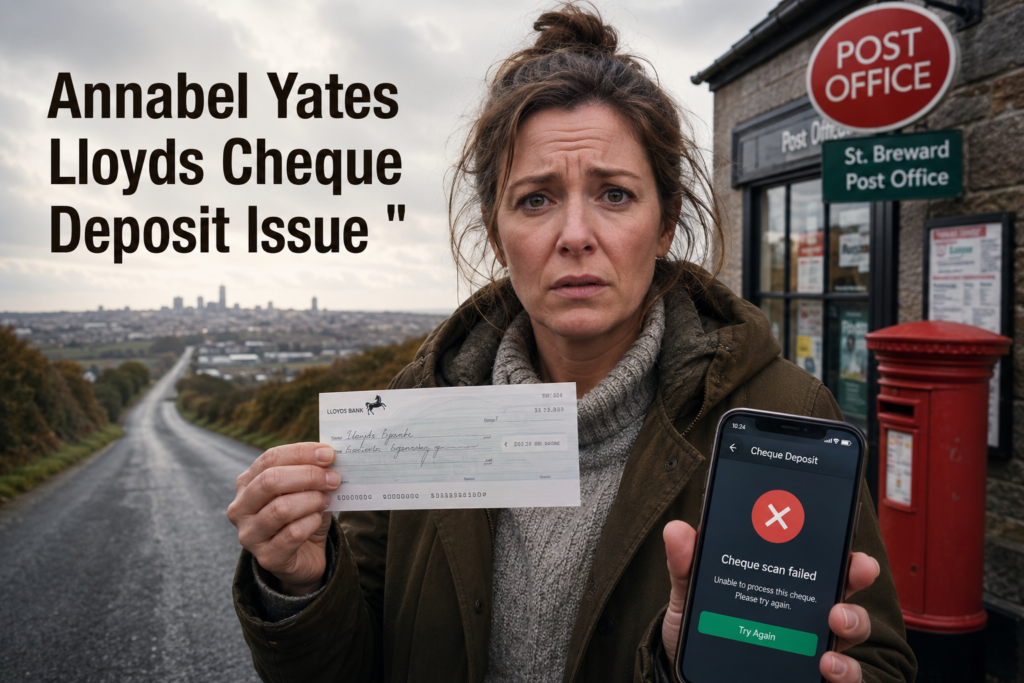
A recent case involving Annabel Yates from Cornwall has highlighted the growing challenges some customers face as traditional banking services disappear. What started as a simple attempt to deposit a £900 HMRC cheque quickly turned into a 94-mile round trip after multiple deposit methods failed.
The incident has now sparked wider discussions about rural banking access, branch closures, and whether major banking groups are leaving some communities behind.
Who Is Annabel Yates?
Annabel Yates is a resident of Cornwall whose experience with Lloyds Banking Group recently gained media attention across the UK. Her story resonated with many people living in rural areas who already struggle with reduced access to banking services.
Yates publicly urged banks not to “forget” rural communities after she encountered major difficulties trying to deposit a cheque issued by HM Revenue and Customs (HMRC).
Her experience reflects concerns shared by many customers who rely heavily on nearby Post Offices and local branches for everyday financial tasks.
What Happened With the Lloyds Cheque Deposit?
The HMRC Cheque Would Not Scan
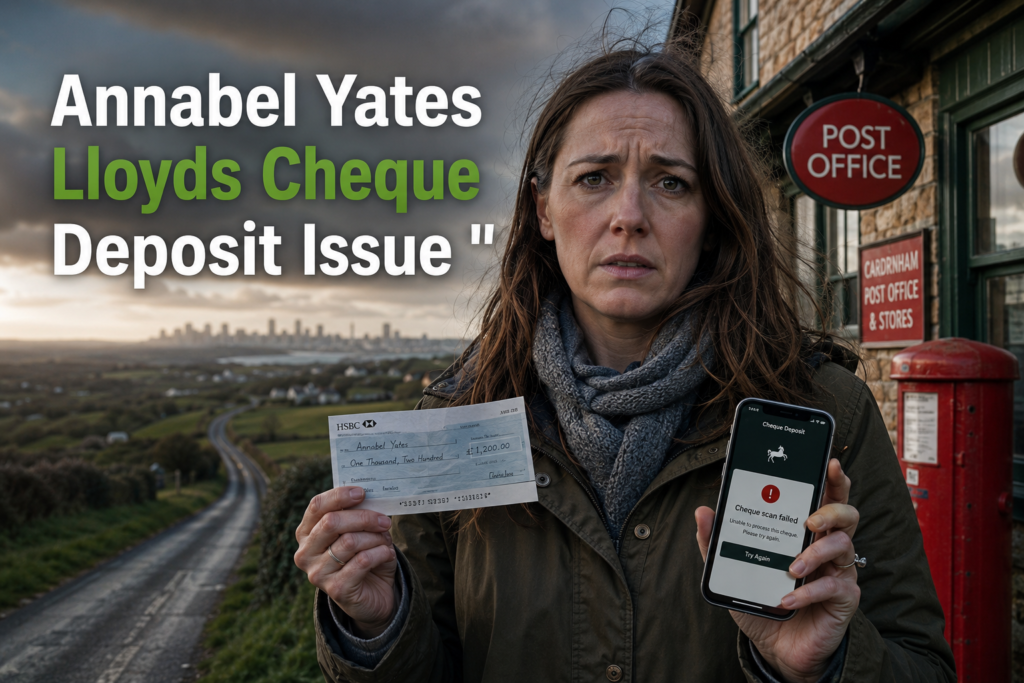
The issue began when Annabel Yates received a £900 cheque from HMRC. Like many customers today, she first attempted to deposit the cheque using the Lloyds mobile banking app.
However, the cheque reportedly lacked perforated edges, which caused scanning problems inside the app. Because the app could not properly read the cheque, the online deposit failed.
For many customers, mobile cheque deposits are supposed to provide convenience. In this case, technology became the first obstacle.
The Post Office Could Not Accept the Cheque
After the mobile deposit failed, Yates visited her local Post Office expecting to complete the transaction there instead.
That created another problem.
She was informed that Lloyds Banking Group customers could no longer deposit cheques through Post Office branches after the service was withdrawn in January 2026.
The decision affected customers of:
For rural communities where physical bank branches have already disappeared, the removal of Post Office cheque deposits became a major inconvenience.
A 94-Mile Journey to Reach a Branch
With both the mobile app and Post Office options unavailable, Annabel Yates eventually travelled approximately 94 miles round trip to Truro to visit a physical branch and deposit the cheque.
The long journey quickly became a symbol of a larger issue affecting many rural residents across the UK.
While customers in major cities often have multiple nearby banking options, people in remote areas may need to travel significant distances for even basic services.
Why Rural Communities Are Concerned
Bank Branch Closures Continue Across the UK
Over the past several years, banks across the UK have continued closing physical branches as more services move online.
Banks argue that:
- fewer customers use branches,
- digital banking demand has increased,
- and operating costs remain high.
But critics say these closures disproportionately affect:
- elderly residents,
- people without reliable internet access,
- disabled customers,
- and rural communities.
Digital Banking Does Not Always Work Perfectly
The incident also exposed limitations in digital banking systems.
Mobile cheque deposits may fail because of:
- damaged cheques,
- printing issues,
- lighting problems,
- or scanning restrictions.
Customers who are less familiar with banking apps may also struggle with technical issues.
For rural residents, where internet signals can already be unreliable, depending entirely on digital banking is not always practical.
Lloyds Banking Group’s Response
Lloyds Banking Group stated that customers still have several options available for cheque deposits.
According to the bank, customers can:
- use the mobile banking app,
- visit any branch,
- or send cheques using a Freepost deposit service.
However, critics argue that these alternatives are not always convenient for people living far from branches or for those uncomfortable mailing important documents.
The story triggered public debate about whether banks should provide stronger support systems for rural communities before removing local services.
The Bigger Debate Around Banking Accessibility
The Annabel Yates case has become part of a broader conversation happening across the UK.
Many campaigners believe banks must balance:
- digital innovation,
- cost reductions,
- and customer accessibility.
While mobile banking is efficient for millions of users, others still depend on in-person services for financial confidence and convenience.
Community leaders have warned that removing local banking access can increase isolation in rural areas and make simple financial tasks unnecessarily stressful.
Facts About the Annabel Yates Lloyds Cheque Deposit Story
- Annabel Yates is from Cornwall, UK.
- She received a £900 HMRC cheque.
- The Lloyds mobile app reportedly failed to scan the cheque because it lacked perforated edges.
- Lloyds Banking Group stopped cheque deposits through Post Offices in January 2026.
- Yates travelled around 94 miles round trip to Truro to deposit the cheque.
- The story sparked concerns about rural banking access in the UK.
- Lloyds says customers can still use Freepost cheque deposit services and mobile banking.
Could Other Customers Face Similar Problems?
Yes, similar issues could potentially affect other customers, especially those living in rural areas or relying on Post Office banking services.
Cheque scanning technology is not perfect, and when digital options fail, customers may have limited alternatives if nearby branches have closed.
Experts suggest customers should:
- check deposit rules beforehand,
- ensure cheques are in good condition,
- and confirm available local banking services.
Insights
The Annabel Yates Lloyds cheque deposit story may seem like a small banking issue on the surface, but it highlights a much larger challenge facing rural communities across the UK.
As banks continue moving toward digital-first systems, many customers worry essential in-person services are disappearing too quickly.
For Annabel Yates, depositing a simple HMRC cheque became a frustrating 94-mile journey. For many others, the story serves as another reminder that modern banking still needs to work for everyone — not just those living near branches or comfortable with digital technology.
FAQs
Why could Annabel Yates not deposit her cheque online?
The cheque reportedly lacked perforated edges, preventing the Lloyds banking app from scanning it correctly.
Did Lloyds stop cheque deposits at Post Offices?
Yes. Lloyds Banking Group ended cheque deposit services at Post Offices for Lloyds, Halifax, and Bank of Scotland customers in January 2026.
How far did Annabel Yates travel to deposit the cheque?
She reportedly travelled about 94 miles round trip to Truro to reach a Lloyds branch.
What alternatives does Lloyds offer for cheque deposits?
Lloyds says customers can:
- use the mobile banking app,
- visit physical branches,
- or use a Freepost cheque deposit service.
Why are rural communities concerned about bank closures?
Many rural residents depend on local branches and Post Offices because nearby banking alternatives may be far away or difficult to access.
Can all cheques be deposited through mobile banking apps?
No. Some cheques may fail due to printing issues, damage, missing features, or poor image quality during scanning.