
Why the Simi Valley Fire Spread So Fast Across Southern California
The wildfire reportedly started on May 18, 2026, near Sandy Avenue in Simi Valley. Strong winds and dry vegetation caused the flames and more…..
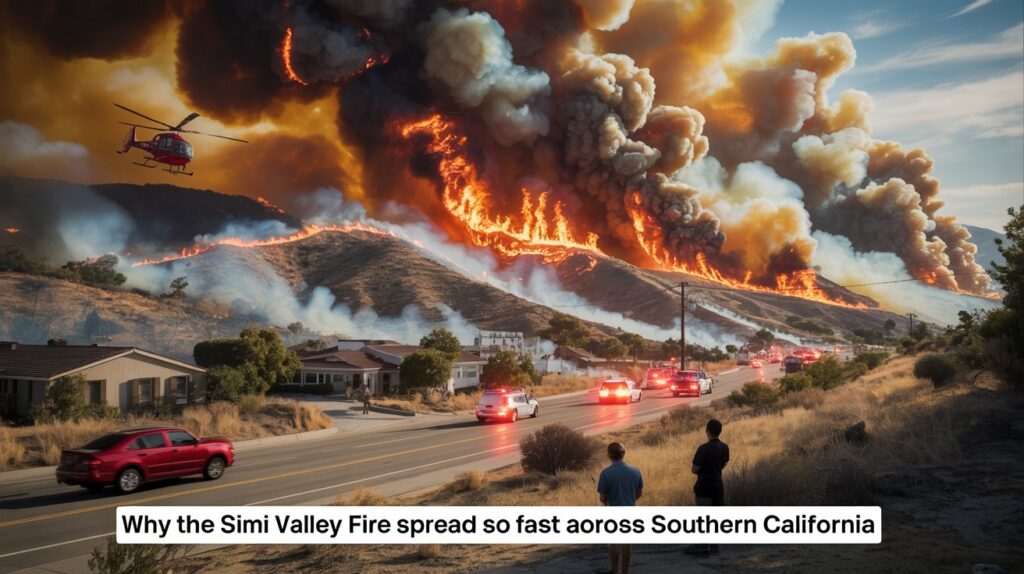
The wildfire reportedly started on May 18, 2026, near Sandy Avenue in Simi Valley. Strong winds and dry vegetation caused the flames to spread rapidly through hillsides and residential areas.
Key Details
- The fire is officially being called the Sandy Fire
- Thousands of residents were placed under evacuation orders
- Multiple homes and structures were threatened
- At least one property has reportedly been damaged or destroyed
- Firefighters used helicopters, air tankers, and ground crews to fight the blaze
- Winds reportedly reached 30–50 mph, worsening conditions
Current Situation
Reports indicate:
- The fire quickly grew from around 180 acres to more than 1,300 acres within hours
- Containment was initially listed at 0%
- Schools in the area were temporarily closed
- The Ronald Reagan Presidential Library closed as a precaution
Why Simi Valley Is Vulnerable to Fires
Simi Valley sits in a wildfire-prone region of Southern California where:
- Dry brush and hills fuel fast-moving fires
- Hot weather and low humidity increase fire risk
- Santa Ana winds can rapidly spread flames
The area has experienced major wildfires before, including the historic Woolsey Fire in 2018.
Latest Updates
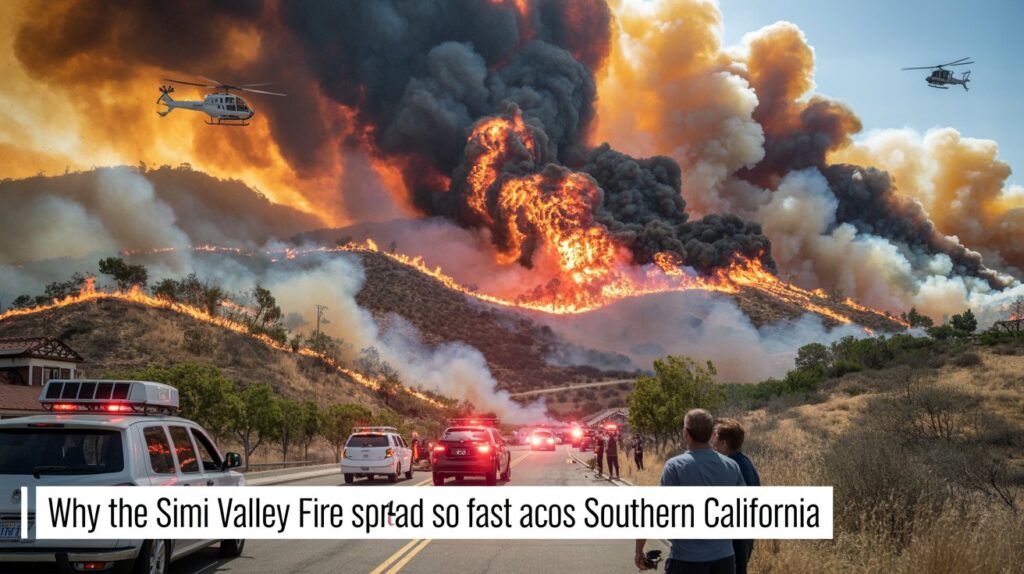
Authorities continue monitoring evacuation zones and fire containment efforts. Emergency shelters have also been opened for residents and animals affected by the wildfire.
You can also follow updates from: