
Who Is Peitner? Meaning, Origin, and Background Explained
The surname Peitner does not have a direct modern dictionary meaning. Like many Germanic surnames, it likely developed from older naming traditions.
The keyword “Peitner” is primarily known as a surname of Central European origin, most commonly found in countries like Austria and Germany. It is not a global brand, concept, or widely used English word, but instead appears in genealogical records, personal names, and regional documentation.
This article explains the meaning, origin, and background of the Peitner surname in a clear and SEO-friendly way.
Meaning of “Peitner”
The surname Peitner does not have a direct modern dictionary meaning. Like many Germanic surnames, it likely developed from older naming traditions.
Most surnames in this category are derived from:
- Occupations or trades
- Geographic locations
- Personal or ancestral names
- Regional dialect expressions
Peitner fits into the category of traditional European family names that were used to identify lineage and heritage rather than describe a literal meaning.
Origin of the Peitner Surname
The surname Peitner is most strongly associated with:
It is believed to have emerged during the period when surnames became standardized in Europe, roughly between the Middle Ages and early modern era. During this time, governments and churches required fixed family names for taxation, property records, and official documentation.
As a result, many surnames developed locally and were passed down through generations.
Historical Background
Surnames like Peitner typically have a localized history, meaning they may have originated independently in different villages or regions.
Common patterns in their development include:
- Use in rural communities before urban records
- Influence of regional dialects and pronunciation
- Changes in spelling over time due to handwritten records
- Standardization in official civil and church registries
Because of these factors, the exact historical origin of “Peitner” may vary depending on the specific family line.
Where the Name Appears Today
Today, the surname Peitner can be found in:
- Genealogy and ancestry research databases
- Academic or professional records
- Austrian and German civil documents
- Online personal and family profiles
- Local businesses or family-owned organizations
It remains a relatively uncommon surname, which makes it more distinctive in modern records.
Possible Variations
Over time, surnames often change slightly due to migration, pronunciation, or clerical recording differences. While “Peitner” is generally consistent, related variations may appear in historical documents depending on region and language influence.
Such variations are common in European surname evolution, especially when families moved between regions or countries.
Why People Search “Peitner”
Search interest in the term usually comes from:
- Genealogy and family history research
- Identifying individuals with the surname
- Academic or legal record searches
- General curiosity about surname origins
Because of its low competition and specific nature, it is often used in niche SEO content targeting informational queries.
SEO Content Opportunities
The keyword “Peitner” is suitable for informational blog content such as:
- Who is Peitner
- Peitner surname meaning and origin
- History of the Peitner family name
- Is Peitner a German surname
- Peitner genealogy guide
These types of articles perform well for long-tail search traffic.
Frequently Asked Questions
Is Peitner a German surname?
Yes, it is most commonly associated with German-speaking regions, especially Austria and Germany.
What does Peitner mean?
It does not have a single defined meaning but is part of traditional European surname structures linked to family identity or regional origin.
Is Peitner a common name?
No, it is considered a relatively rare surname.
Insights
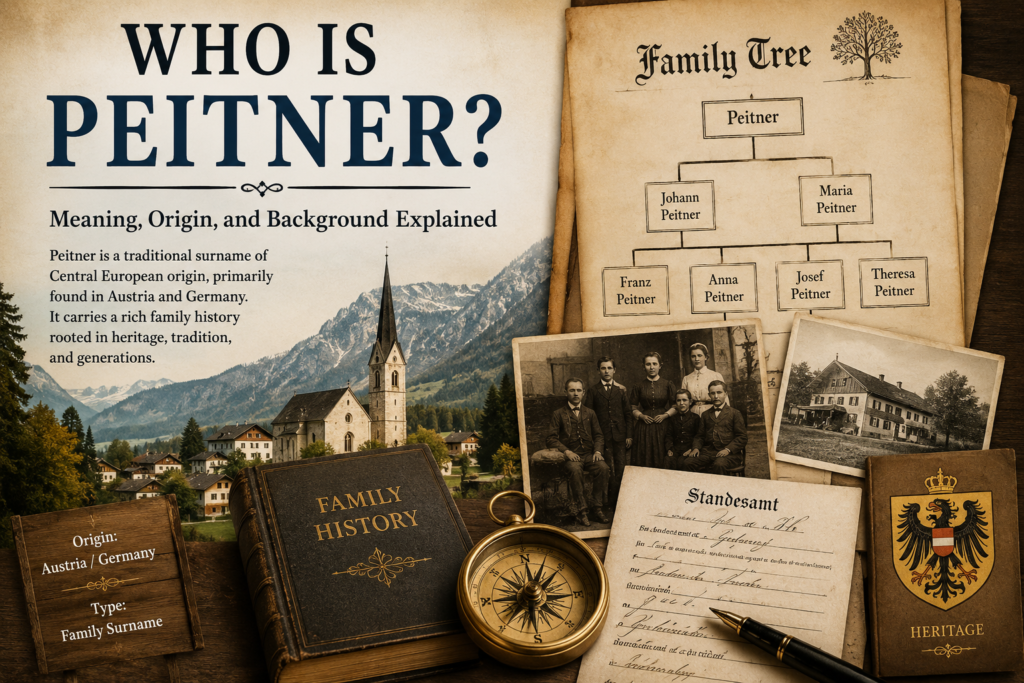
The surname Peitner is a rare Central European family name with roots in Austria and Germany. While its exact meaning is not clearly defined, it follows traditional European naming patterns tied to geography, ancestry, and historical record-keeping.
It is primarily searched today for genealogy, identity research, and informational purposes, making it a strong niche topic for SEO-focused content.