
How is it possible for ski jumpers to stay in the air so long and how do they train for that?
Ski jumping is one of the most breathtaking sports in the Winter Olympics and World Cup. Athletes launch off a ramp at speeds over 90 km/h (56 mph),

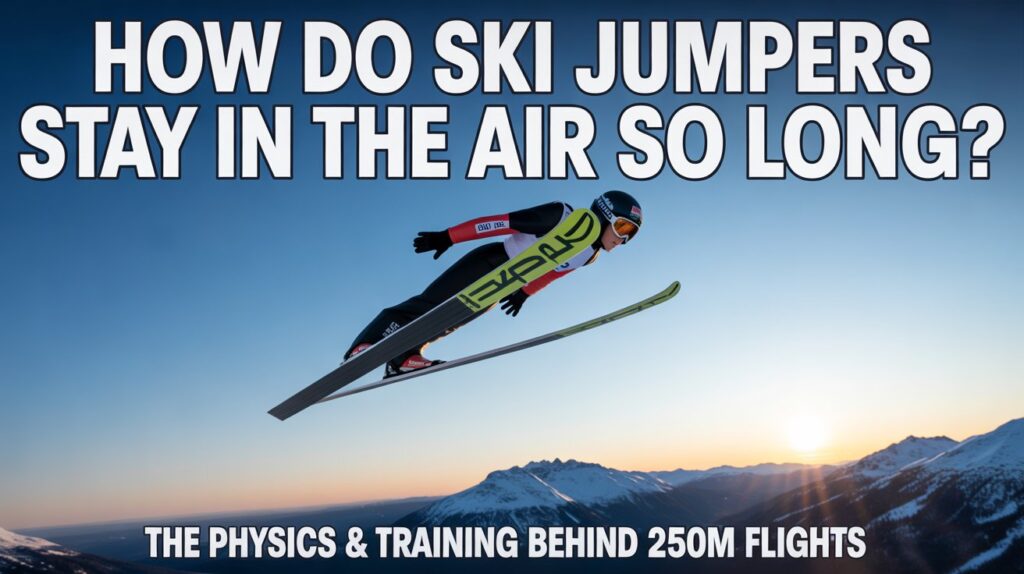
Ski jumping is one of the most breathtaking sports in the Winter Olympics and World Cup. Athletes launch off a ramp at speeds over 90 km/h (56 mph), then appear to float through the air for 5–8 seconds, covering distances that often exceed 200–250 meters. It looks like pure magic or outright defiance of gravity. In reality, it’s a masterful combination of physics, precise technique, specialized equipment, and intense training.
The Physics: Turning the Body into a Wing
Ski jumpers don’t truly “fly” like birds or airplanes, but they maximize lift while minimizing drag to stay airborne far longer than a simple ballistic trajectory would allow.
1. The Takeoff
Jumpers accelerate down the in-run, converting gravitational potential energy into kinetic energy. They reach takeoff speeds of 90–110 km/h. In the final moments on the ramp (often just 0.3 seconds), they explode upward and forward with powerful leg drive while positioning their body for the optimal launch angle. Timing here is everything.
2. Aerodynamics in Flight
Once airborne, three main forces act on the jumper: gravity (pulling down), drag (air resistance slowing them), and lift (pushing them up and forward).
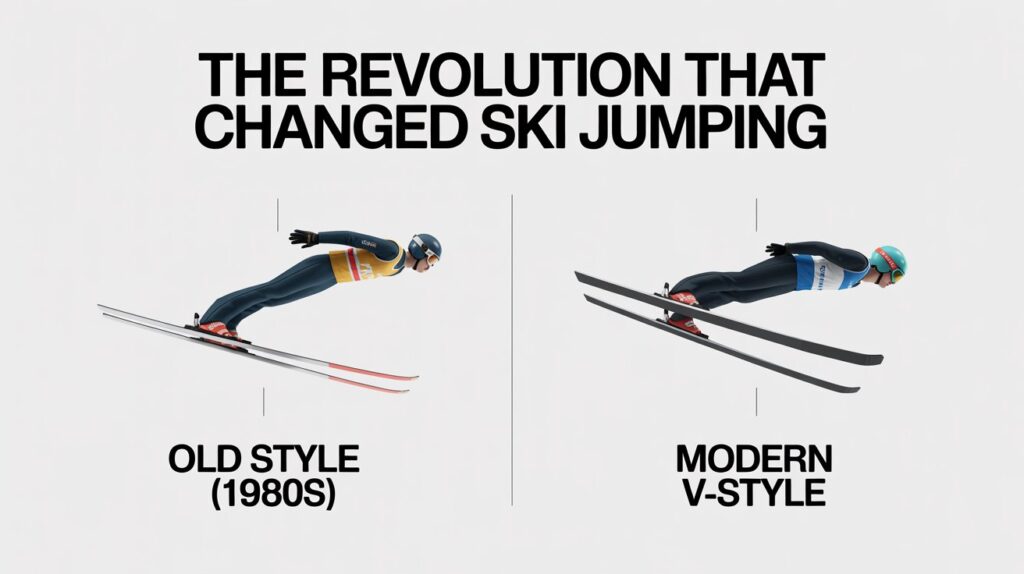
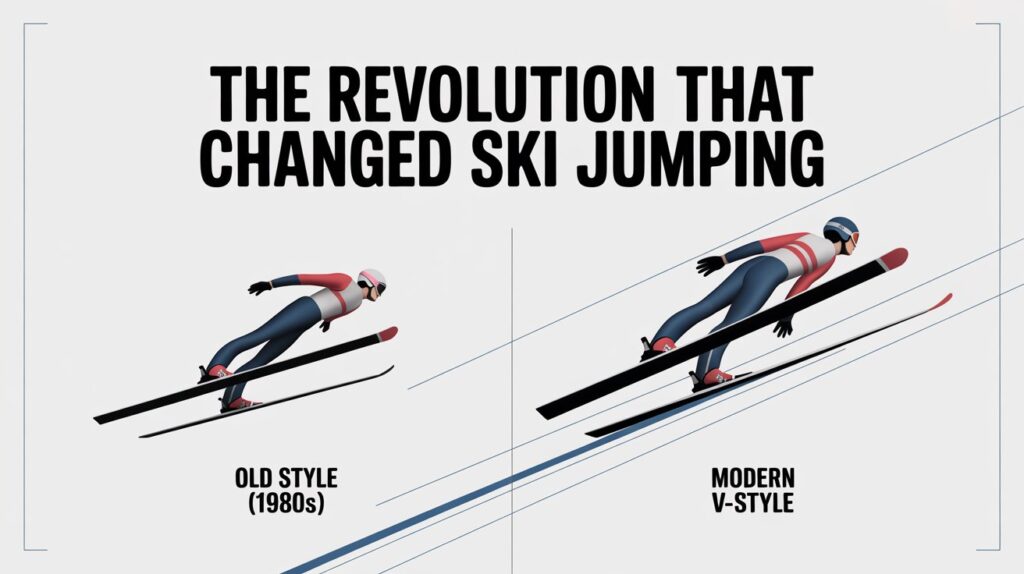
The secret lies in body and ski positioning. Modern jumpers use the V-style, where the skis are spread outward in a V shape (tips apart, tails closer), the body leans far forward, and the arms are held back or slightly out. This position dramatically increases surface area exposed to airflow, creates an ideal angle of attack, and generates significantly more lift than the old parallel style. The V-style can produce about 30% more lift.
By Bernoulli’s principle and Newton’s laws, faster airflow over the top and deflection of air downward create upward lift. The jumper essentially glides on a cushion of air pressure. Small adjustments in hip, knee, or shoulder angle can make big differences in distance.
Further reading on the V-style and aerodynamics:
- Why do ski jumpers soar in a “V” shape? (Olympics.com)
- The Freaky Physics of Ski Jumping (Smithsonian)
- Why ski jumpers hold their skis in a V (Vox)
3. Other Key Factors
- Equipment: Skis are long (up to 145% of the jumper’s height) and relatively wide. Suits are tightly regulated for air permeability.
- Wind and Conditions: A slight headwind helps; air density affects performance.
- Power-to-Weight Ratio: Lighter athletes with sufficient power generally fly farther.
The official world record in competition is 254.5 meters (Domen Prevc, 2025). Non-official jumps under special conditions have gone farther (e.g., Ryoyu Kobayashi’s 291m mark).
The Athlete: Technique and Physical Demands
Staying in the perfect flight position requires exceptional strength, balance, and body awareness. Jumpers must fight the natural tendency to rotate while maintaining a stable, aerodynamic posture under high forces. Core strength, explosive leg power, and proprioception are critical.
How Ski Jumpers Train for the Air
Training is year-round and highly specialized. The goal is perfect takeoff explosiveness, rock-solid flight position, and safe landings.
Dry-Land Training (Off-Season Focus)
- Plyometrics and explosive power (box jumps, Olympic lifts).
- Core and stability work.
- Strength circuits focused on power rather than bulk.
Summer Jumping and Technique Work Athletes train on hills covered with plastic mats (often sprayed with water for glide). This allows hundreds of jumps in the off-season. Video analysis and coaching refine body angles. Some teams use wind tunnels.
On-Snow Training Progressive practice on smaller to larger hills, with emphasis on takeoff timing.
Further reading on training:
- How to Train for Ski Jumping with No Snow (Olympics)
- FIS Summer Training explanations on plastic mats.
Nutrition and Body Management Jumpers maintain a lean but powerful build for the best power-to-weight ratio. Recovery and injury prevention (knees, back, ankles) are priorities.
Evolution and Safety
Ski jumping originated in Norway in the 19th century. The V-style revolution (pioneered by Jan Boklöv in the late 1980s) transformed the sport. Modern rules strictly regulate equipment and hill design for safety and fairness.
Official Resources:
Conclusion
Ski jumpers stay aloft through a beautiful synergy of physics and human dedication. They don’t break the laws of gravity — they exploit them with precision. What looks like effortless floating is the result of thousands of hours of grueling training and split-second decisions. These athletes turn science into art.
FAQs
Q: How long do ski jumpers actually stay in the air?
A: Typically 5–8 seconds on long jumps, depending on hill size and conditions.
Q: Do they really “fly,” or is it just falling?
A: It’s controlled gliding. They generate enough lift to extend their trajectory significantly beyond a pure projectile path.
Q: Why the V-shape with the skis?
A: It maximizes lift by increasing surface area and optimizing airflow. It also helps create drag later for a safer landing.
Q: Can anyone learn to ski jump?
A: It requires exceptional athleticism, courage, and years of progressive training from a young age. Most elite jumpers start as children.
Q: Is it dangerous?
A: Yes. Crashes at high speed can cause serious injuries, but safety improvements have made it safer than in past decades.
Q: What’s more important—distance or style?
A: Both. Distance is primary, but judges award style points for clean takeoff, stable flight, and telemark landing.
Q: How do they train in summer?
A: On plastic-covered jumping hills. The technique and movements are nearly identical to winter jumping.